A Bit Of A Post-Job Rejection Splurge

Posted: 28th March 2011 by Mulholland in Acquisition
Tags:

As the title suggests… I got rejected from a fantastic sounding job where I would be paid to interview musicians for a government musicology-based project. After a bit of howling and lamenting it was time for a little bit of retail therapy (aided by Jeroen).

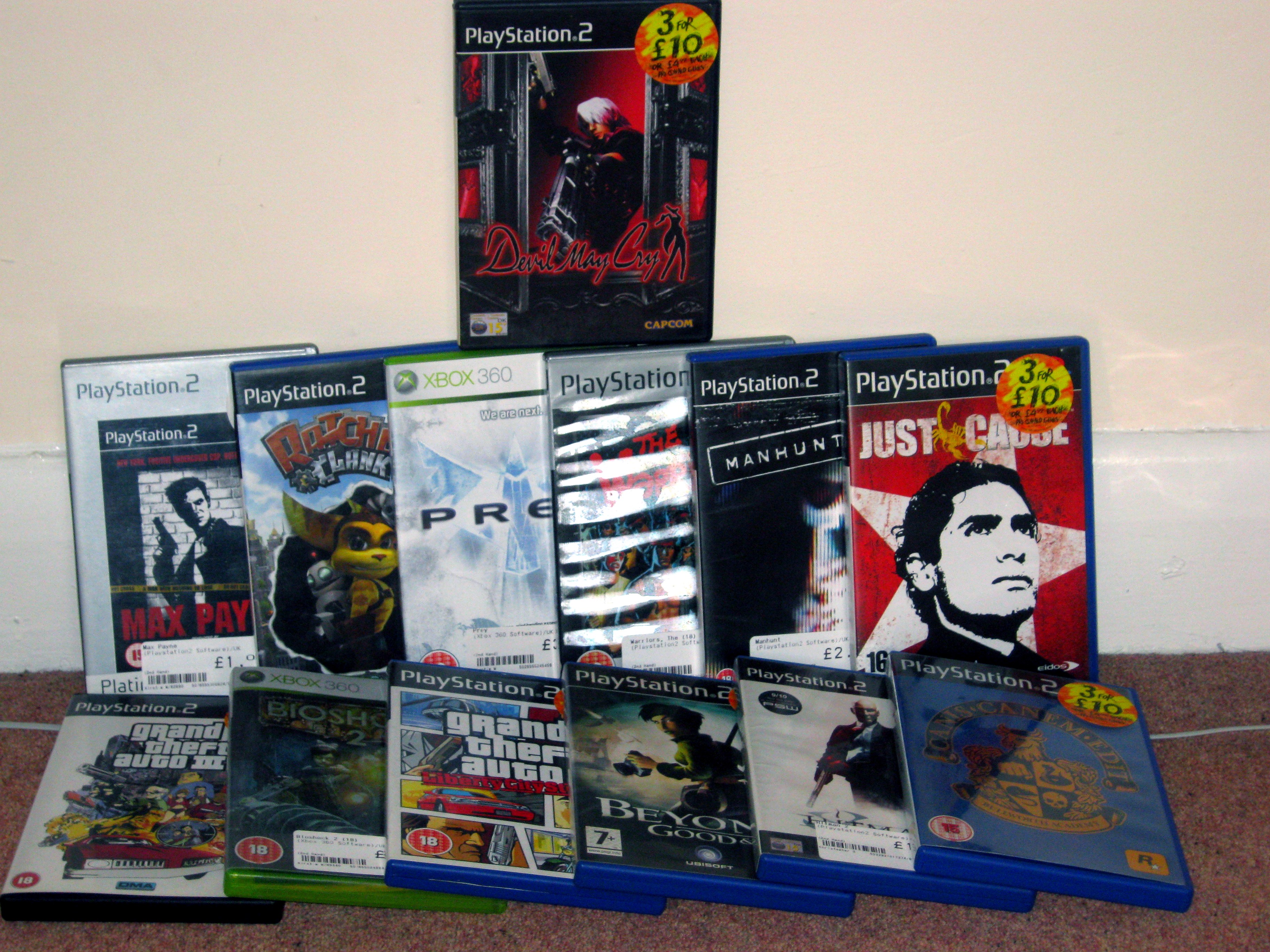
Overall we spent 40 quid on 17 second-hand games from Gamestation and Entertainment Exchange… 4 of which later emerged to not be on the 1001 list but still interesting to play. So, what games did we get? Here’s a nice list:

  • Grand Theft Auto III
  • Bioshock 2
  • Grand Theft Auto: Liberty City Stories
  • Beyond Good and Evil
  • Hitman 2: Silent Assassin
  • Canis Canem Edit (aka Bully)
  • Devil May Cry
  • Max Payne
  • Ratchet and Clank
  • Prey
  • The Warriors
  • Manhunt
  • Just Cause

I have no idea how long it will be before we start on this new pile of games, personally I am very much looking forward to The Warriors and I know for a fact that Jeroen really wants to play Max Payne.

Welcome Home!

Posted: 26th March 2011 by Mulholland in Acquisition
Tags:

Just a quick update from us at Pong And Beyond… the 360 is has returned and is working normally once more.

I for one am so glad she is back and I look forward to playing my increasing number of games on you.

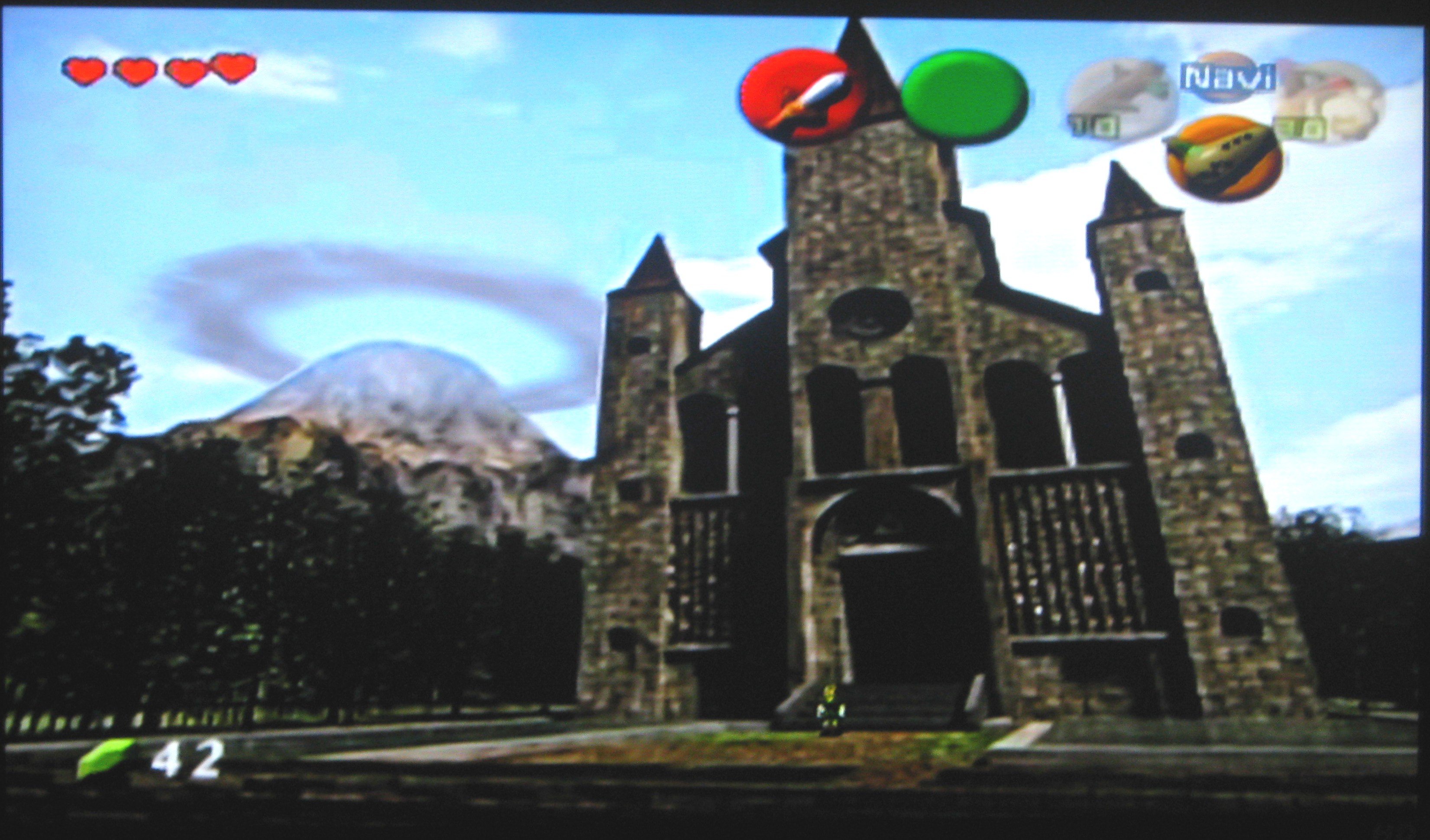
#391 The Legend of Zelda: Ocarina of Time

Posted: 25th March 2011 by Mulholland in Games
Tags: , , , , ,

41st game played so far

Genre: Action/Adventure
Platform: Nintendo 64
Year of Release: 1998
Developer: Nintendo
Publisher: Nintendo

Upon it’s release The Legend of Zelda: Ocarina of Time was dubbed by the gaming industry as the greatest computer game ever made. It was one of those gaming landmarks that only comes around one or two times in every console generation.

Previous to this the Zelda games was already one of the most respected franchises in the gaming world with titles such as Link’s Awakening and A Link to The Past made giant steps for Nintendo. It took nearly five years to make and has been making waves ever since.

Our Thoughts

It’s strange. On one hand, this game took the Zelda series to 3D and introduced a lot of new concepts, including the songs we saw in a number of subsequent games. On the other hand, this game really sticks to the old concepts and feels like it fits in, just with a more flexible camera. It’s changed far less than, say, Mario‘s transition to 3D. I guess that’s because in the previous Zelda games you still moved in what could be thought of as three dimensions whereas Mario was classically a side-scroller. Therefore Mario needed a far larger overhaul when it was brought to the Nintendo 64 compared with what Legend of Zelda required.

In a sense true, but also in basic gameplay the game stays more true to its roots. While in Mario, you went from a level-based structure, one after the other, to the mission-based structure of Super Mario 64, The Legend of Zelda: Ocarina of Time works the same as the similar games, exploring the world that gets progressively unlocked. Why mess with a formula that’s proven to work well? I mean Link’s Awakening pre-dated Ocarina of Time and is arguably their best outing on a handheld. Oh, it’s absolutely a good move and I’m glad they did it – the series does make the transition to 3D very well – but I still find the contrast between the two series interesting, and it rarely happens that a series makes the transitions while staying this close to the original. With the exception of fighting and sports games I know what you mean.

In a way they were able to change the game from being purely dungeon based to being based a lot around the sweeping scenery. I remember my first venture into Hyrule Field many years ago, I was truly taken aback. Mario became cartoony platform 3D fun, Zelda became breathtakingly cinematic. Absolutely, and while it felt part of that was already present, it integrated beautifully. It’s certainly not a 2D game made to be 3D, it makes the best use of it that it can; including plenty of puzzles making use of the 3D setting, from having to get around fences to crawling through small holes, and jumping down holes with precise aiming.

It also works with the stealth missions… which ranks as one of the most frustrating mini-games introduced to this long running series. Something we also touched on in our Majora’s Mask discussion. I understand that it breaks up gameplay but it feels unnecessary. That’s the main reason it’s in there, another reason to get through the game rather than constantly battling. But they’re simultaneously more frustrating than a dedicated stealth game like Metal Gear Solid, and simpler with less options to get through there. It makes good use of the time features since the guards have their own schedules more or less and it is easier to sneak around when it is night-time. Always a helpful, and something you’d expect. Not that you can just change the time around until you get through the first stealth part.

I always did enjoy the use of the songs in the game to unlock new features or to further the plot line. Something I guess I missed a little bit in Twilight Princess (where, if I remember correctly, they generally abandoned the use of magical music altogether). It could be, that’s of course one of the games I haven’t played yet.

Even the camera angles (something we have majorly quibbled about with its contemporaries) are well executed. That’s possibly the biggest compliment we can give here – we didn’t really have any trouble with the camera, so we had no reason to complain about it. And that’s the way that should be.

Now, we played the Gamecube port (available with the first release of The Wind Waker), so I’m not sure whether the graphics were upgraded there, but it felt not – they feel less detailed than Majora’s Mask, but at the same time the simplicity seems to have allowed for larger, more integrated areas of the world, making the game seem smoother and larger. I disagree completely. Granted the time constraint in Majora’s Mask mean less exploration was available but it was by far a larger and lusher world when compared to Ocarina of Time. Yeah, that’s true. My point is not that Ocarina of Time’s is larger, it’s that Majora’s Mask world is divided in more smaller areas (such as the main town having small sections), where Ocarina of Time’s are larger and more joined together – I get the feeling Ocarina of Time’s first town has one area the size of three sections of Majora’s Mask’s.


I guess that was helped by the restricted AI and graphics lent to the NPCs. It was interesting that in Link’s hometown you could see their fairy counterparts before the NPC themselves. I guess it saved a lot of loading time. Yeah, that’s one other odd thing that makes sense from that point of view – the characters themselves weren’t shown until you were quite close. It saved loading time… and probably allowed them to be more impressive elsewhere. Then they were able to improve this with Majora’s Mask by creating the large world outside of the city which leads to all the areas with randomly generating enemies as well as other Hyrulian style paraphernalia.

It’s pretty apt that these two games are usually compared to one another because there is such a kinship between the two (with Majora’s Mask being a direct sequel) but I guess that in terms of features I alway felt Majora to have the edge. Even if the three-day time limit can be brutal. Absolutely true, the three day limit is… somewhat annoying, but as the sequel, it’s clearly better in nearly every way.

Considering the 3D action/adventure was still very much in it’s infancy as Ocarina of Time burst onto the scene it is easy to see how it was dubbed by many as the greatest game ever released. There was nothing out there quite like it and it played a lot like your own personal fantasy movie. Even if the graphics have dated immensely the fundamentals still play like an absolute dream.

Final Thoughts

This is the penultimate game from the first batch of Kat’s games meaning that, as we decided after finishing our write-up, we will be targeting more obscure games (granted Quadradius and Drop7 are fairly unknown but that’s by the by) as well as some interesting looking arcade games like Lunar Lander. Personally I am really hoping that we get to Second Sight and The Logical Journey of the Zoombinis pretty soon as they have been resting in our to do pile since early December.

#783 Quadradius

Posted: 21st March 2011 by Jeroen in Games
Tags: , ,

40th game played so far


Genre: Strategy
Platform: Internet
Year of Release: 2007
Developer: Jimmi Heiserman and Brad Kayal

For whatever reason we have been doing less games per week so it’s time for us to deal with a game available online which has a short completion time. We will also be increasing the gaps between game write-ups since there are a few weekends coming up where we are unable to cover new computer games due to either a trip to Oxford to see Derren Brown or a very Dutch homecoming for Jeroen.

Quadradius fit the bill of what we needed perfectly and is all the more stunning since it (alongside games like Line Rider, Audiosurf and De Blob) found life as the pet projects of students either in high school or university. It really does make us wish we had done more with our time in education rather than, well, study.

Our Thoughts

Here we have a great discovery of a game that neither of us would have even heard of without the book… and probably no played if not for our challenge. I am very thankful for this since Quadradius is fantastic. Yeah. Our basic discovery process was Peter saying “Hey, this sounds interesting”, me saying “We do need another strategy game, and it’s easily available online” and then us deciding to give it a try. The fact that it was available to play for free as a guest only sweetened the detail even more. Note that paying for it opens up more options… something our gut-based attempt didn’t let us do, and the free experience is already great.

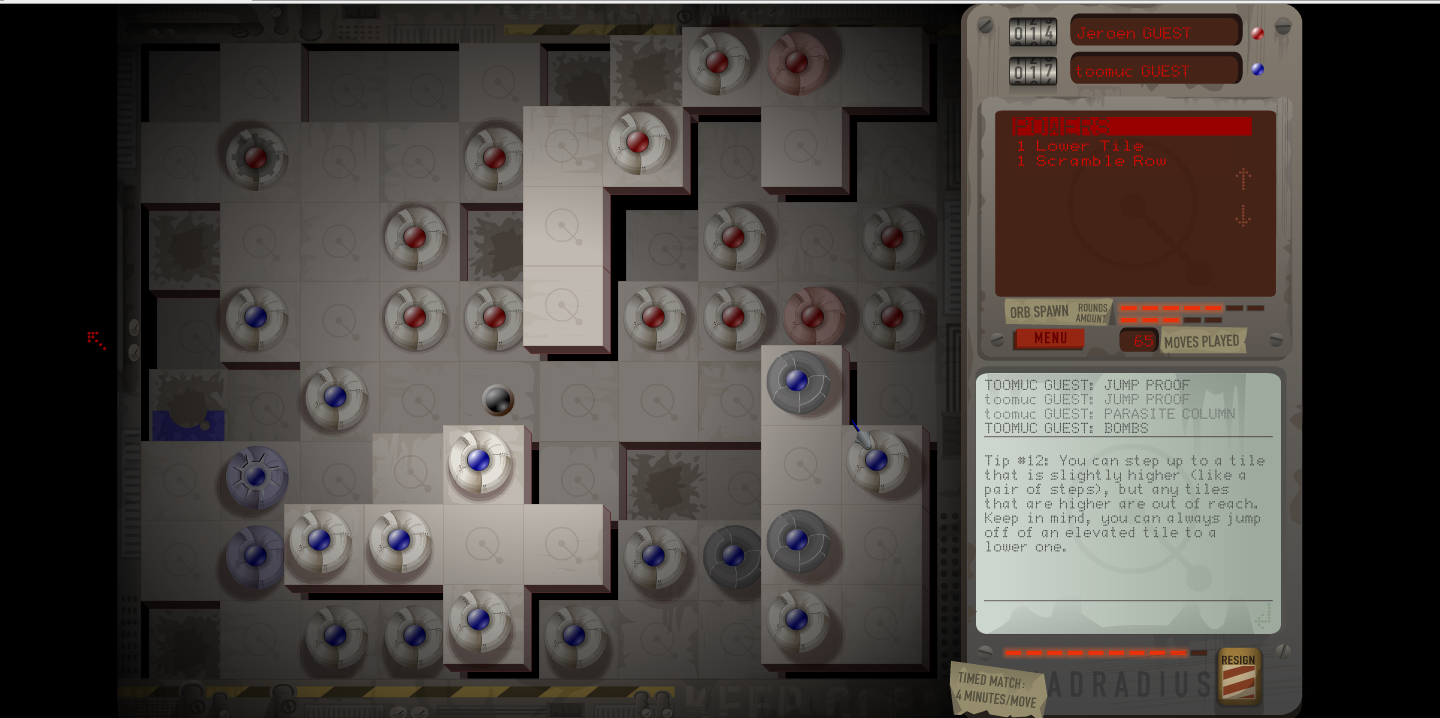
Quadradius is probably best described as draughts, or checkers, with powerups  (and no kings). These powerups are extremely varied and includes shuffling, side-switching, smart bombs and spy gadgetry. And possibly the prettiest, raising or lowering the squares on the board so you can’t reach certain places as easily. This helps change the game to a very three dimensional experience which resembles the multi-level games of chess played by Kirk and Spock on the original episodes of Star Trek. This is complicated even more by certain powerups like the acid one which burn holes in the floor and render certain paths completely unnavigable, something which happened to my final piece in our last game due to bad luck involving the shuffle power. Indeed, although you were slowly being hunted at the same time, as I had the harder to reach higher ground.

In the end, a lot of the play does some down to how the powerups work out. It helps to successfully tow the line between luck and stategy since, in the end, if you have a mind capable of thinking multiple moves ahead you will be able to master this. However, considering both the amount of powerups available and how the balance of power in single game to change dramatically at sporadic intervals you can not just rely on strategic smarts. Yeah, working ahead means you can make the best use of the powerups, but without some luck, you’ll just be getting things you can’t use. But while playing, you don’t get the feeling your luck is that important most of the time. Absolutely, you only pray to the gods of luck when you use an air strike that targets random squares and end up killing more of your guys than your opponents’. Yeah, the Bombs really change the game around in that sense, but not something you’re sure of. It’s can be a real gamble. Yet if it pays off, it can change the game around in your favourite.

Aside from the well executred gameplay something which wowed me somewhat was the graphics. Yeah, the graphics are gorgeous.  They’re not overly detailed, but they look great. The 3D effects on the field are especially gorgeous. Despite being a seemingly simple Flash game, you look through holes in the squares and it literally gives it an extra dimension. Your ‘squad members’, the guys you play with, are simple, but because of this they can add on many more effects depending on the powerups you add. Everything is done in an industrial style which is a staple of most action-RPGs. Of course this is turn-based rather than being dependant on reaction time. It’s the futuristic style that we still have and love.

Final Thoughts

I think you can all guess that we both loved this game. We spent just over 2 hours playing 3 head-to-head games where I (Peter) came out on top 2-1. Please give this game a go (by clicking here) with some friends and you will see why it is such fun.

#381 Metal Gear Solid

Posted: 17th March 2011 by Mulholland in Games
Tags: , , ,

39th game played so far


Genre: Stealth
Platform: PS1
Year of Release: 1998
Developer: Konami
Publisher: Konami

Once upon a time, in a distant gaming past, there was a fairly well-known platformer called Metal Gear. It did well, but the series was only truely revived when it was brought to the PlayStation as as a proper 3D stealth game, a franchise that’s still alive now due to this game. You’re supposed to sneak around bases trying to prevent a nuclear war from starting, while interacting with your weirdly named allies and enemies, and use your weapon as little as possible.

Our Thoughts

And now for a game which incensed Jeroen utterly. You really did not like using cigarettes to uncover infra-red beams did you? Not when it feels almost impossible to figure out when you can step forward. But no, my bigger issue was that these guys have randomly placed trapdoors in corridors that call you from falling down then. There’s one for the health & safety crowd.

When you consider that these people are working for a company that are trying to make something which make nuclear arms look as dangerous as sherbet dabs I don’t think they care too much about the opinion of the health and safety officer. Also I think every guard is probably provided a cheat sheet upon their job orientation. One we never get to see…

As a character you sneak in with cigarettes concealed in your wazoo… Yeah, that is a bit weird. It’s a pretty ingenious way to aid gameplay though. The fact that it also detracts from your HP is also rather cool. It’s a clever trick, yeah. But it takes some time to get used to it. I took to it a lot quicker.

The game isn’t bad, it’s just not my sort of thing entirely, which makes it more complicated. Yeah, but you started off playing, I jumped in halfway through. To be fair, the actual stealth parts were rather easy so far. You need to figure out what to do, but it wasn’t that horrible when I played it.

I like that during the stealth mode you can take the route of snapping all the guards’ necks or just sneaking past them. It’s sad but it was fun to watch them fade away as they lie dead on the floor. It takes a different set of nerves from waiting and running past when you get the chance. It was the waiting that always ended up with you shot in the head after falling down a trapdoor, otherwise they were pretty easy to dodge. No, it got me everywhere. Being greedy and unclear on where to go caused me to fall down. Which, to be fair, wasn’t a criticism of the game – we just don’t pay enough attention. Who’s we? I think I needed to help you figure out where to go a few times as well.

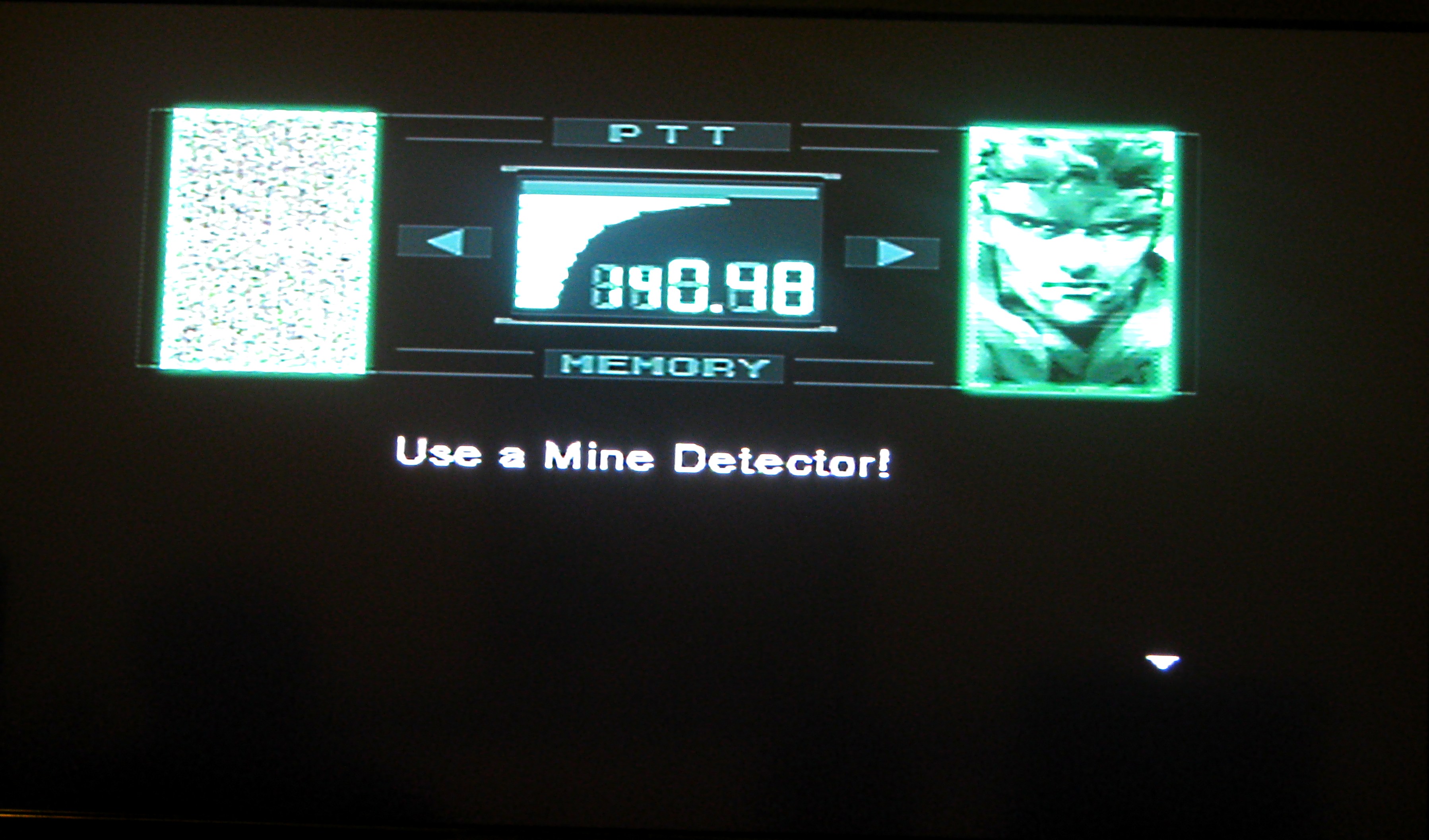
The copy protection is not helping much more. That is something that was very impressive though. To get further in the game you need a transmitter frequency to speak to Meryl and this is concealed in a screenshot on the back of the CD case. For the sake of maintaining copy protection we will not be including this code in the blog… but it’s available in every FAQ and walkthrough made about this game.

To be fair… it’s something other games did, although often not integrated as well. It was common early on in the PC world, until the true advent of CD. However, this is far better integrated than most – rather than being dropped into a separate screen where you need to enter a code, you need to use the game itself. Of course, you do need to realise you need to look there – this is a free tip for you on that. I remember a few games where the code was on the CD itself… which really disrupts gameplay. That’s called “Not thinking about it” It’s also called buying a knock-off copy of Dogz 4 out of the trunk of someone’s car at a secondary school computer fair. Yeah, that’s a bit dodgy anyway and not something either of us condone.

An interesting thing about this game is that it really was the one that popularised the stealth genre. As the game begins you find yourself in a factory in Alaska with only a scope and an infinite pack of cigarettes. The weapons mechanics themselves are shockingly bad so you really do need to heavily rely on sneaking around… even if it means startling the mice in the ventilation ducts.

Since this was such a critical revelation it helped to carve out a new niche in gaming that later went on to inspire stealth gameplay in almost every action game made today. It also led to a shedload of sequels and prequels as well as the very successful Splinter Cell games. Yeah, when it comes to stealth, this game does it well – and mostly, it doesn’t require you to solve their one stealth puzzle, but also allows for multiple options; sometimes including weapons, but often not.

Life is always better with explosions. Those were fun. It’s also better with enemies with ridiculous names like Revolver Ocelot… I mean what the hell is that meant to be. Yes, and a Raven, and you’re of course a solid snake… whatever that means.

One interesting feature is the communications feature. This goes two ways (rather than the common someone poking you at random intervals) and provides hints when you need them. The characters get their own personality and while it is sometimes silly, it helps establish the atmosphere. The many different nationalities help as well. It was really like a giant Benetton ad… but as a stealth game. And I guess it works. In a weird way, it certainly makes it feel a bit more international… even if occasionally stereotypical.

Final Thoughts

It’s a good game – why else would it be in the list? Stealth games don’t really go my way, but this game does work. It’s not too complicated, and you get a lot of tools at your disposal to make it past the stealth areas to make it an easy enough thing. Still, despite that the difficulty is there, at a manageable level.

The graphics are good – with the usual for its time, but because the game does relatively little with zooming in and out or weird perspective changes, you don’t notice it as much. There is a repitition in textures, sure, but the desiners make it work well. All in all, it looks good, plays well, sounds good… but Revolver Ocelot remains ridiculous.

360 Goes To Frankfurt?

Posted: 15th March 2011 by Mulholland in Annoyance
Tags:

Yay my new 360 is so shiny! Yay! Yay? Oh…. crap.

That’s right readers my new Xbox is already having troubles even though it is only two and a half weeks old. In short the disk drive is already shot with it first being unable to eject our Lego Star Wars disc (is it bloody jinxed or something!) so we followed the solution on the official website… after which it still didn’t eject and in fact could no longer read any disc we put into it… ARGH!

To give Microsoft (and UPS) their credit since my 360 was still under warrenty (as you would hope after only 18 days of gameplay) I was able to get it sent off for repairs with UPS within 24 hours. The only cost being the box to ship it in and a new black ink printer cartridge. So as I write this my beloved console has been whisked away to the repair centre in Frankfurt and will apparently not be back for about a month… I hope it’s sooner than that to be honest. I really want to play Prototype!

#908 DJ Hero

Posted: 13th March 2011 by Mulholland in Games
Tags: , , , , , ,

38th game played so far

Genre: Music
Platform: Playstation 2, Playstation 3, Wii, Xbox 360
Year of Release: 2009
Developer: FreeStyleGames
Publisher: Activision

We may be jumping a little late into the music game franchises by taking on DJ Hero, a spin-off title from the bestselling Guitar Hero series, but when both the game and a controller are available on the cheap we just had to do it. It is also a fantastic welcome back for my new Xbox 360 with this being it’s first outing on the blog.

Having had a lot of experience with Guitar Hero when playing in a 360 band called Hardcore Street (hi Mike and Prerna!) this is a game I have been looking forward to playing this ever since it came out.

Our Thoughts

Do you feel funky? Surely there is a cooler way we can start this. I mean for the first time in my life I actually feel rather ‘with it’. I’ve been trying to find one for the past half hour while you were selecting the picture.

Since you have mentioned that you should be good at this game because of the abundance of successful Dutch DJs would you like to give the first topic of discussion? Yes, with DJ Tiesto, Armin van Buuren and other large names being Dutch, this game is obviously of high cultural significance to me, similar to how the Brits would appreciate a good game of Queuing Tycoon. And this game certainly works incredibly well for what it tries to do.

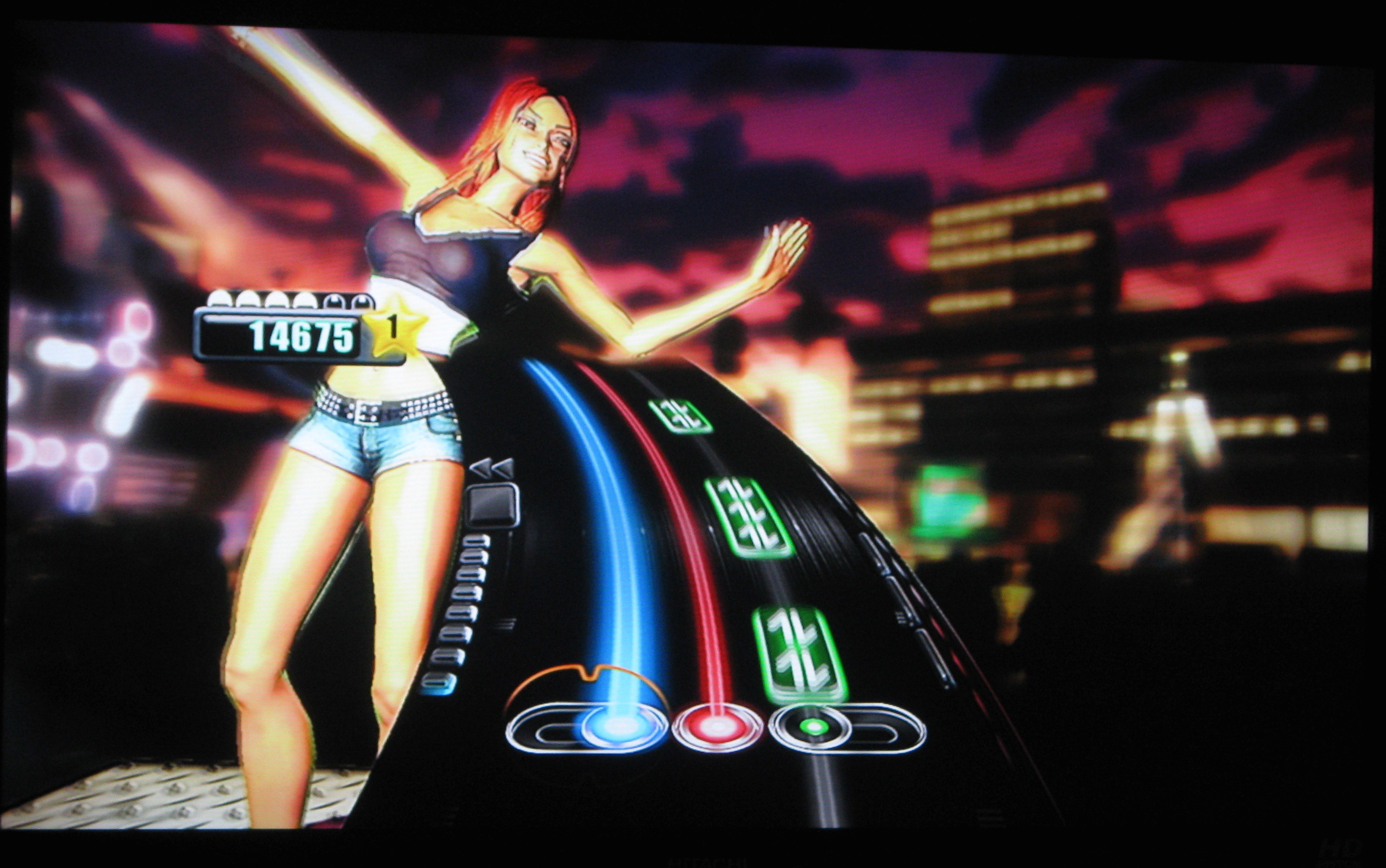
First, the gameplay is similar to try and remember – there are a couple of options, but there’s not much that happens, all of this comes from the reflexes required to do well. Reflexes that can be combined with the music, as the controls follow it and drag you in. Combine that with a large crowd dancing to your music and the lights and all that changing in response and you get an immersive, fun game.

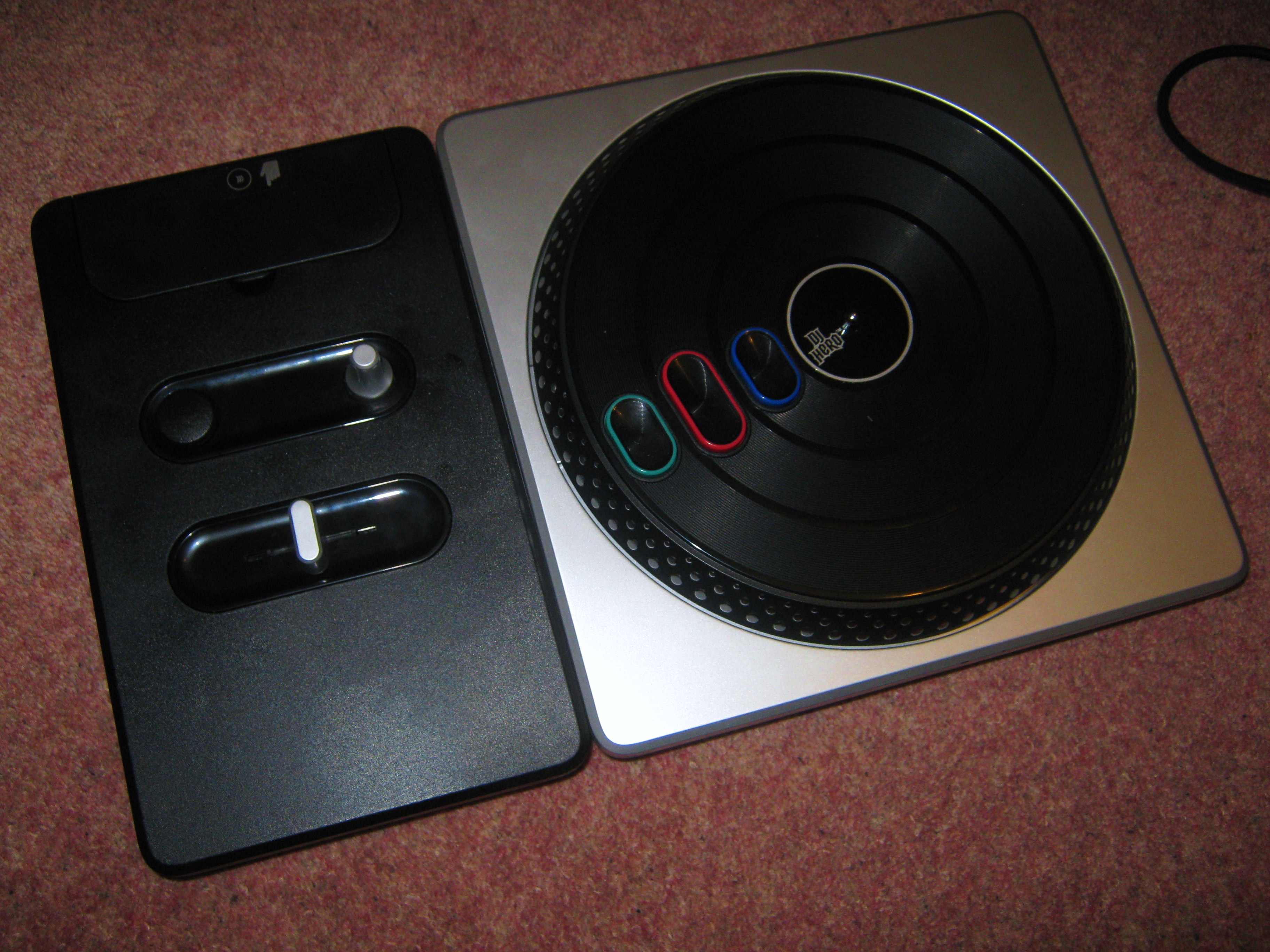
Of course the most important being the controller, being an actual similar turntable. Well the game itself would be utterly impossible if it was not for the controller. Yeah, true, but that actually adds to the immersion. You have to hand it to the guys behind the Guitar Hero and Rock Band franchises since they really raised the bar for gaming peripherals. Making the games more expensive (yay for a 25 pound discounted set at HMV), but helping immersion a lot. They really have been selling off a lot of music game controllers… may have to invest in a drum set and guitar in the near future. So expect more of these games soon.

Aside from special controllers there is one thing that really makes or breaks music games: the soundtrack. All the fantastic gameplay in the world cannot save a music game if you aren’t enjoying the music itself. DJ Hero has it more difficult than more conventional games in the same genre since the tracks are all remixes. It really helps that professional DJs such as Daft Punk, DJ Yoda and Grandmaster Flash are involved since they have so much accumulated know-how on which songs work together that neither FreeStyleGames nor Activision could possibly lose. With the last of the three also being your voice through the tutorials.

Very well done tutorials they were too, I mean it was actually fun learning how to play with the turntable controller. You were basically pulled in, DJing from the start. This really helped with building a beautifully executed difficulty where you felt confident trying out some of the harder songs almost from the word go. Granted you would still not too well on them, but it sure is great fun to give it a go. Although due to the progressive star system, you can give them a go early on and get some nice results on it, and you get better when you go back to the songs later on.

The star system works very well since there is a whole wealth of unlockables including character customisations, new set lists and levels. Aside from the obvious Sprite product placement in one stage (Sprite: Quench you Thirst Now!) there is a great variation which allows you to really make the experience all the more personal. Yeah, and while only the set lists really matter to gameplay, the visuals (when the game allows you to pay attention to them) look so good that they’re a reward into your own right. Getting new headphones might not matter as much, but the DJs and stages look gorgeous and make a major difference. I think the customisable turntables are fun; I liked spinning vinyl on radar displays. They were interesting and well, and very futuristic.

I guess one thing that I would have liked to have seen was a ‘career mode’ which can be found in the original version of Singstar as well as Guitar Hero. It would have been really cool to pay as a DJ who rises the rankings to become the next headliner at Ibiza. This was something actually added in DJ Hero 2, so I look forward to seeing it’s placement on the next edition of the 1001 list.

One thing that saves that for me is that there are plenty of set lists that allow for crossover with Guitar Hero by having you scratch decks as a friend rocks on their guitar. Granted this option is not universally available but enough songs have it to make it a worthwhile feature. The Guitar Hero addition makes me curious about playing that, and seeing how well it integrates, but it looks interesting – just as the multiplayer DJing possibilities we haven’t been able to try out – we haven’t had a second controller to do so.

Summarizing all that, we’ve had a great time playing the game – in turns, finishing sets together or competing with each other, marvelling at the visuals, but mostly enjoying the music and feeling you’re actually being the DJ in the club.

Final Thoughts

As the cultural (though not actual) DJ Hero on here, I can say that this is a game that makes you feel like one – probably not if you’re actually a DJ, but that’s similar to how you probably won’t normally crawl down pipes to save a mushroom kingdom. The visuals are gorgeous – extravagant for a game where they’re no more than just the background – and the gameplay is exciting and fun. It feels right and plays well, with lots of nice unlockables. Most important, there is a great collection of music and the game makes great use of that through the mixes it offers.

Music games may not be for everyone, and our judgement is probably influence by how unique the game is, butthis is a worthwhile game in the genre. I’ll be looking forward to the next one we get to play.

#527 The Legend of Zelda: The Wind Waker

Posted: 10th March 2011 by Mulholland in Games
Tags: , , , , ,

37th game played so far

Genre: Action/Adventure
Platform: Gamecube
Year of Release: 2002
Developer: Nintendo
Publisher: Nintendo

Time again to visit the land of Hyrule and indulge in a little Zelda action. Today my friend Kat’s game collection takes us to the 2002 classic game The Legend of Zelda: The Wind Waker which was the console-based sequel to the earlier covered Majora’s Mask. Despite these games being released one after the other they really are worlds apart. The lush landscapes are now replaced with a vast expanse of oceans and the graphics underwent a direction which no fan of the series could have expected.

Our Thoughts

So here’s another Zelda. Now the Gamecube’s Wind Waker. No fart jokes today, we promise. I am so embarrassed with you for that remark. Seriously, you just needed to go there. No, I’m just saying we’re not going to …and I’m an ovum. I haven’t noticed that yet…

The Wind Waker will always be special to me as it was the first console game of Zelda that I ever owned (not counting Ocarina of Time which was packaged with my copy of The Wind Waker). This is similar as to how Link’s Awakening will always occupy a soft spot in my heart as it was my first on a handheld. Since I had previously played Majora’s Mask at a friend’s house I was already aware of the graphic style of the typical Zelda game… something which The Wind Waker famously deviated away from.

For those who cannot remember, or did not pay attention, to the controversy leading up to the release of this game (Link’s first foray onto the Gamecube) I guess a brief explanation in order:

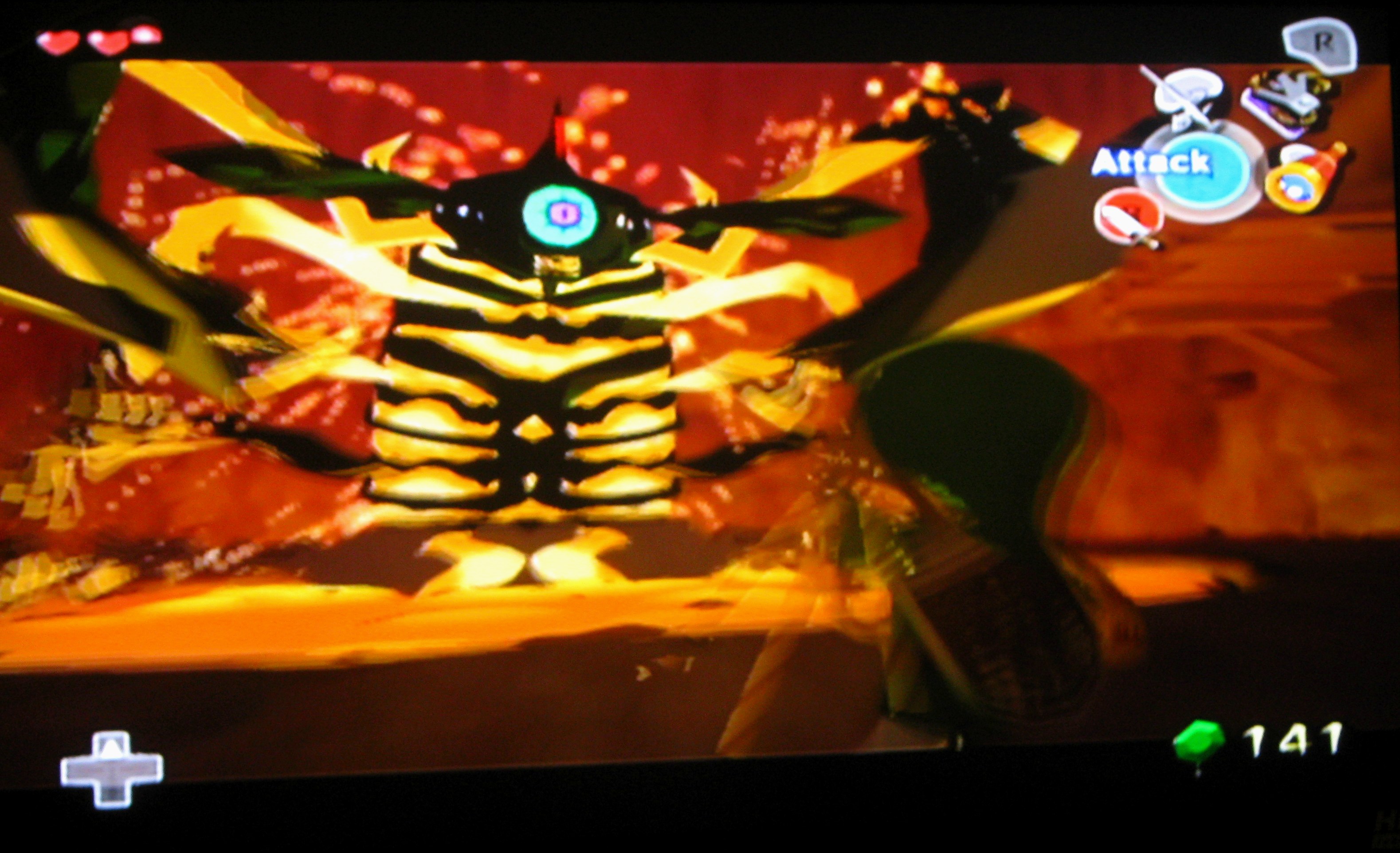
Normal console Zelda games had always attempted to have some degree of realism to them whilst also being able to allow for the fantasy elements of staple races such as the Deku. Here in The Wind Waker the developers instead opted for a cel-shaded animation feel where 2-dimensional sprites were found in the 3-dimensional world. This later caused the game to be dubbed as Celda (and caused many Zelda-purists to denounce the game before it’s release).

Thing is… I never found a problem with the graphics. I have always been a fan of stylised graphics in a game as the look and feel of it is far less likely to age when compared to it’s contemporaries. If you’ll allow me to interject here, yeah, the graphics are clearly a different style, and I can see how it bothers people. The thing is that the simplification in graphics did not have the same effect on gameplay or story – this is still a difficult game – but its looks are deceiving here. Thing is, between the different games in the series, the graphic style already has its changes, and the SNES Link to the Past already had a similar change in graphics, so I can’t see exactly where it comes from. The main thing that bothered me is that because it looks this way, Link actually look quite a bit younger – which can be a bit weird. You have this ten year old kid fighting bosses and running around volcanoes. He might have been intended of a similar age in previous games, it looks weird.

This age relates to the beginning of Ocarina of Time where Link starts out as 10 and then ends up at 17 after the time jump… if I remember correctly. He is definitely in his late teens in Twilight Princess. Making him younger than most games in this one… and it feels weird. Anyway, it does mean that his emotions look a bit more exaggerated. He looks very determined just sidling past a ledge. The look of concentration on his face is just darling. He also throws a mini strop if you stop playing for a while; he gets a little bit bored and sways back and forth until you start playing again. Yeah, he’s a sweet young kid, I suppose.

What’s interesting about using a cel-shaded look (apart from making it look like an anime) is that there is a bit of a contrast between the violence and the childlike surroundings. Very true, actually. The NPCs look funny and sweet. At the same time, the enemies are dark and somewhat frightening at times. At the same time, the environments work in the same way. You have bright environments in the towns and cities, and then in the dungeons it’s dark, filled with skulls, with just torchlight lighting up some of the areas.

An aspect where the cel-shading helps make it slightly creepy is the eyes. No matter how dark it gets the eyes of Link and the NPCs still stay fully lit. With Link it’s cute, with the rats and bats it’s rather macabre. This can make the game rather jumpy at times; e specially during the (rather un-Zelda) stealth parts. Those early stealth parts really did shake me, this was helped incredibly by the use of incidental music. Yeah. Not helped by the fact that you have no weapon or anything else to defend yourself with it. Add to that that getting back after that takes a long time, making it awkward, complicated, and frustrating. It’s very tense.

There is also a great freedom in this game which comes from your need to sail between the islands (using the Wind Waker’s power to bend the breeze to your will). Yeah, they creating a feeling of a large world without boundaries, where you actually need to cover some ground before you get somewhere. At the same way it does remove the more detailed overworld with stuff happening as you travel between parts of the overworld, which is (mostly) replaced by endless oceans. All without a loading screen, which was impressive considering the size of the area related to the consoles processing power. That’s true. It’s all seamless, so they never break immersion. It’s smooth and simple.

Last thing I’d like to say, a fairly small thing – the voicing. I’m sorry, but not only does he look cute, Link sounds even cuter in this game. Adorable, that’s the only word I have for it.

That’s the thing; The Wind Waker does feel adorable which probably stands as the reason that is rarely mentioned in the same heartbeat of Zelda console games as Ocarina of Time and Twilight Princess. It’s my favourite game of the Zelda series since I feel that they were able to contribute a great degree of gaming depth with some very distinctive graphics. It has it’s own identity separate from the rest of the series (minus Phantom Hourglass) and while that is The Wind Waker’s greatest strength it is the sole thing going against it in the annals of gaming history… it visually looks a bit too much like child’s play. And because of that, the best way to do this is probably that this is a great game… just possibly not the best example of a Zelda game. Although to just hold its graphics against that would also seem… petty. In gameplay and difficulty, it’s worthy of the name.

Final Thoughts

So that’s Wind Waker, the second Zelda game we’ve covered here, after previously covering Majora’s Mask. (Ocarina of Time is coming up Very Soon too, so keep an eye out for that). Looks-wise, sound-wise, it’s more kidsy, cuter at times than the other installments, but at the same time it’s challenging. It’s far from impossible, but it’s at that right level of difficulty where it’s challenging, but you know you can beat it.

Is it perfect? Personally, I have a few issues with the sea mechanism, but that’s mostly due to me comparing it to the other Zelda games – it seems better than just randomly warping somewhere clicking on a location on the worldmap – at least for a game like this.

Epic Xbox 360 Re-Acquisition

Posted: 9th March 2011 by Mulholland in Acquisition
Tags:

That’s right people. There is a new 360 on the block!

As I previously wrote in this blog my old Xbox 360 decided to show me the Red Ring of Death during a game of Lego Star Wars and many tears were shed over it’s untimely demise. Since it took me a long while to get it sent off for repairs (where I got a near full refund after they discovered it was totally FUBARed) there was enough money saved up to invest in a new one. This was greatly helped by a donation from my mum which enabled me to capitalise on a rather nice deal on Amazon.co.uk where I received an Xbox 360 with the (one and only) Kinect.

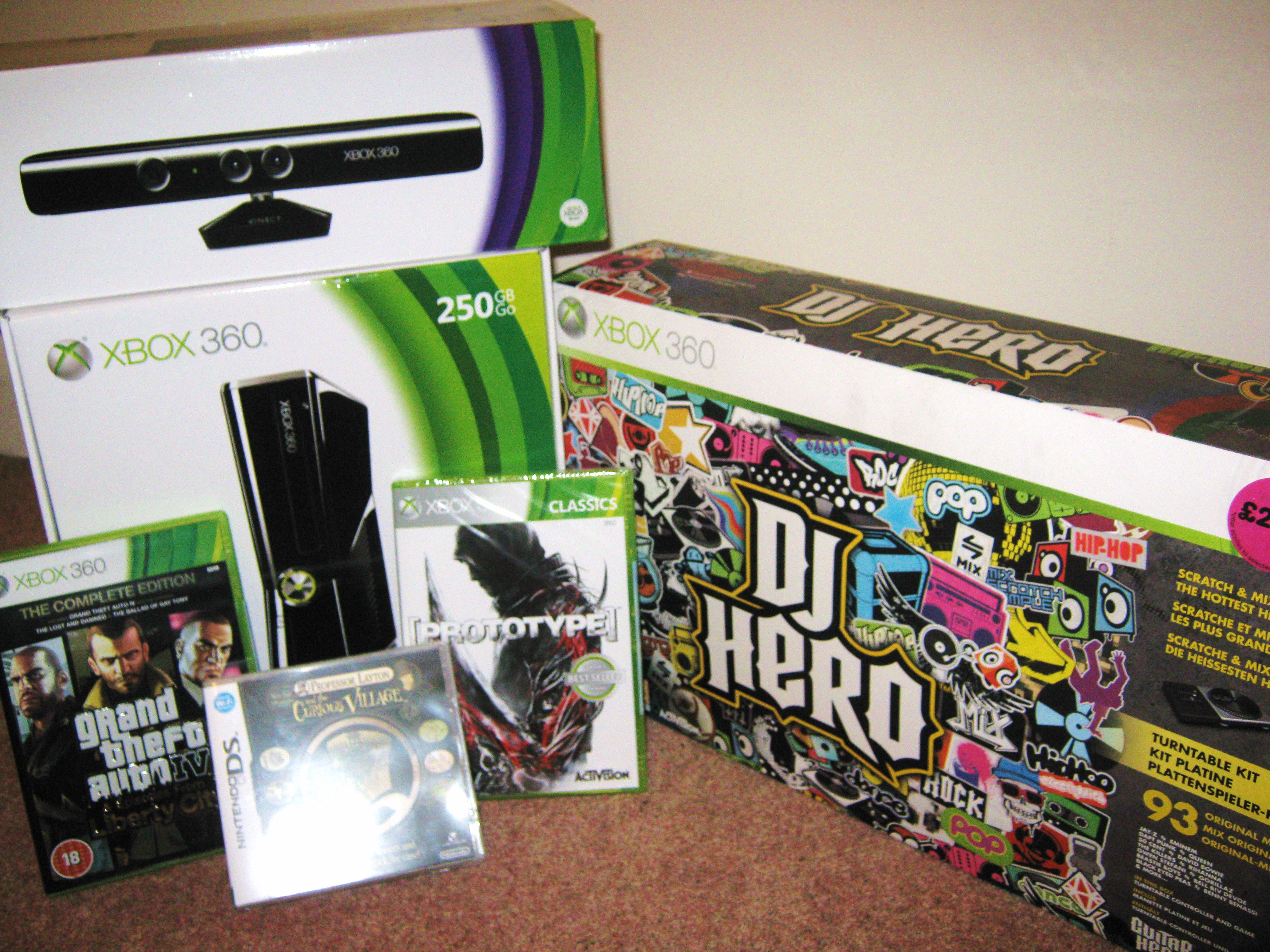
In all this Jeroen felt slightly guilty about not paying towards the new console so we perused the games and got a copy of list games Prototype and the two expansion packs for Grand Theft Auto IV. Also bought were the two Lego Indiana Jones games (not pictured here).

In other news we picked up a cheap copy of DJ Hero from an HMV on Oxford Street and Jeroen bought me a copy of Professor Layton and the Curious Village since he got a Dutch-language version of Professor Layton and the Lost Future and it was vexing me greatly.

How are we going to play all this as well as the new Pokémon Black & White? Lord knows!

#883 Drop7

Posted: 7th March 2011 by Mulholland in Games
Tags: , , , ,

36th game played so far

Genre: Puzzle
Platform: PC/iPhone
Year of Release: 2008
Developer: Area/Code

Sometimes all you need is a decent puzzle game. Today’s blog post, Drop7, is our first puzzle game in a while. It also helps that since Final Fantasy VIII took us an age that we could spend an afternoon on this to try to make up some of the time lost.

For the sake of ease we have delved into Drop7’s original internet incarnation Chain Factor which by all accounts (of what we read both in print and online) is the same game. This is available for free here and we would love your opinions on this game as well.

Our Thoughts

Here’s a nice, short game to discuss. We really did need a game that could be covered in as short a time as possible to make up for the time taken for this blog’s previous offering. And this was a good one we came across as I was researching some games to discuss. Found it online, clicked it and I very much enjoyed it from the start. It’s a game I remember from university… a real little time eater this one. I hadn’t heard of it before, but seemed to get it quite easily. The coveted goal of all simple online puzzles really. The combination of a premise anyone can understand that is also addictive in nature. (And get better than his partner at within a few minutes) (Makes sense that I excel better at games involving quick decisions whilst you flourish with those of a more cerebral nature)

What makes this game all the more extraordinary is that it was really made as a marketing ploy for the American procedural drama Numb3rs. Basically, doing well at this game was one of the ways of moving a metaplot along that preceded the release of the series, one that involved public billboards, secret websites and more of such things for those people who got more involved with that side of things. Dropping numbers was just as useful. Nice to think that my taking time out of my degree helped the advancement of the metaplot of a TV show that I had never heard of. I’m sure you must’ve felt so proud. Not even out of university and already a slave to media.

Now, for the game itself, it’s worth mentioning that this was released as ‘Drop7‘ for the iPhone, and that’s the title it is listed as in the book. As we don’t have an iPhone to play it on, and the book includes the original, we’ve played the online version at http://chainfactor.com/ instead. In gameplay, they’re very similar, the main differences are in look and in a game mode or two that were slightly modified. The gameplay stays the same. I guess that the only way that the games would possibly differ is the implementation of the iPhone’s touch screen.  This would make the game somewhat feel more intuitive since you are able to have a greater degree of control over which column… but then there is the constant threat of a finger slip leading to a game over. Which means it basically ends up working similar to the mouse controls of the Flash version. Also, I think that the graphics also remain on a similar enough levels between the two ports. Yeah, they seem to be.

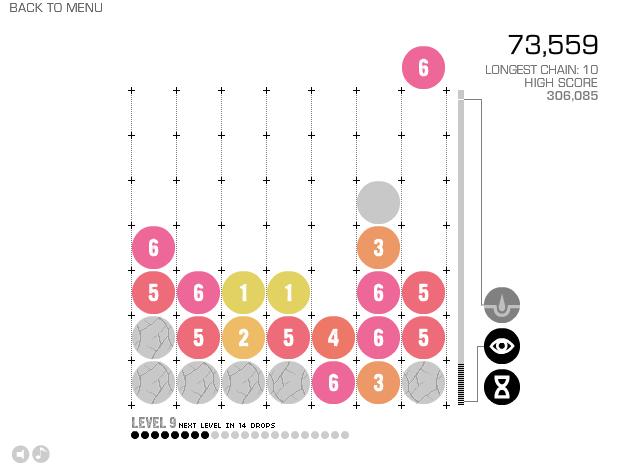
Now, the game itself. It’s quite simple: You get these numbers on discs and drop them in columns.  The numbered discs disappear when they’re in a horizontal or vertical group of their number’s length – so a ‘3’ disc disappears if there are three discs horizontally or vertically, with gaps next to them. There are grey discs, that need to be cleared in two goes by having a block disappear next to them, that become numbered discs afterwards. You can, in some game modes, enable further powers, but that’s it. The challenge is to combine them for as many points as possible without having the blocks in a column reach the top, not helped by the row of blocks being shoved in at the upper side before. One thing that is very important about this game is that you get just as far through sheer strategy as you can through dumb luck. There is something rather satisfying about watching the blocks fall and explode in the midst of a chain reaction. Something that lies at the heart of every good puzzle game is it’s ability to let you sit back and revel in your triumphs. Yes, we know how stupid but it’s a fundamental truth about the life of a gamer. How else would you explain the popularity of Minecraft? Not a game we’ve gotten into.

And that’s one thing the game does. It’s addictive and makes time pass faster than you think. What more could you want there? How about for every chain reaction it sent me an Amazon gift card? I do long for a Playstation 3. Patience, love, patience…

Final Thoughts

Who says that you need a budget of millions and a staff of hundreds to turn out a work of addictive genius. We will be covering other games which, like both this and Audiosurf, were produced far more frugally. Proof, if it were needed, that a simple well executed idea can outshine a glossy convoluted mess.